Understanding Japanese Fashion and Clothing

Last updated on October 9th, 2026 at 06:32 pm

Understanding Japanese Fashion and Clothing

The Japanese are known as some of the most fashionable populations in the world. Fashion, appearance and personal grooming are very important to a lot of men and women in Japan. With Japanese street fashion in the major urban areas being copied throughout Asia. Usually, what is seen on the streets of Tokyo and Osaka is comparable to that of New York and London. Especially with Modern Japanese clothes.

The four seasons in Japan are quite distinctive. Often, clothing requirements for each season vary widely, with the type of material, color, and style being the main variables. Everyday Japanese clothes are practically the same as those worn in North America and Europe. With trousers and t-shirts being a staple for the modern Japanese dressers. The demands of modern everyday life give little opportunity to wear the traditional Japanese clothes such as the kimono. However, it is still regularly seen at weddings, funerals, and other ceremonies.

Html 1

Consumers have a wide variety of clothing to choose from – items made in Japan, luxury brands from Europe and the US, and relatively inexpensive clothes from other Asian countries. Buying decisions depend on personal budgets and purpose. 

Japanese Clothing Sizes 

If you require larger sized clothing, living outside a major city may be difficult. For shoes, stores generally carry stock in sizes up to US 10/26 cm. Clothing is generally stocked up to size L and sometimes XL in men’s ranges. Many non-Japanese people find that, although they fit the Japanese sizes, they often struggle to find garments with long enough sleeves or legs. Larger sized shoes and clothing are generally found only in shops catering to those needs. You may find it is more useful to shop online. 

Html 2

Japanese Workwear and Uniforms 

Most businessmen & women are seen in suits or smart casual attire. However, this will all depend on the nature of the business these people are working in. Also, different companies require specific styles of dress codes. Conservative colors are usually a seen as a sign of neatness and efficiency within Japanese clothing culture. Greys, browns and navy blues are the choice for most suits. 

Factory workers, technicians, laborers in the transportation and retail industries, and store clerks customarily wear work uniforms. Much like in the UK or US. 

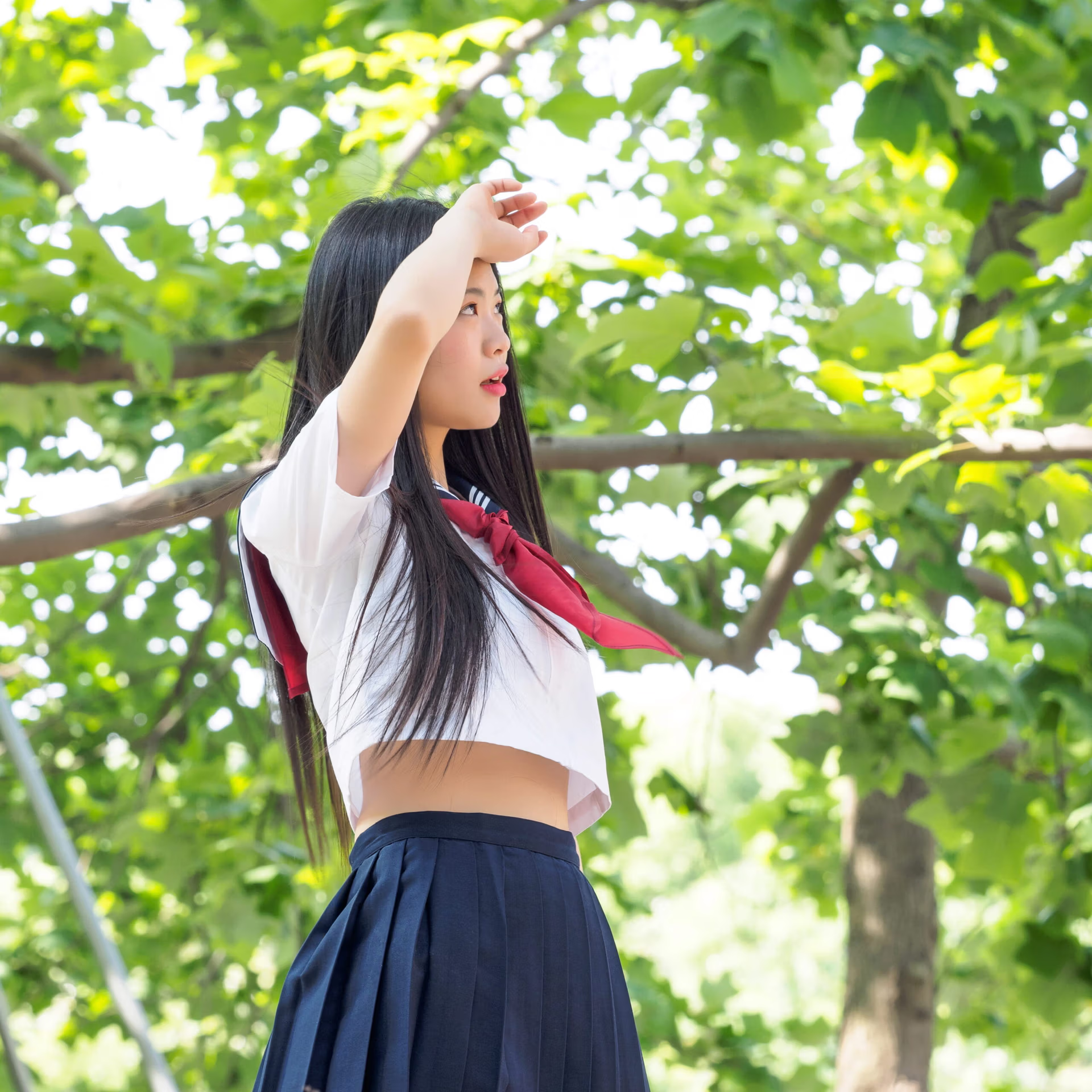
Many schools also insist on uniforms – one for summer and one for winter. Uniforms for junior and senior high school students throughout the country tend to adopt the same type of design – high collared jackets for boys and “sailor” suits for girls. An increasing number of private schools in urban areas have their students wear blazers. Rules for elementary children depend on the region, with some insisting on a uniform and others not. In many elementary schools, students wear a uniform during physical education classes.  

html 3

Traditional Japanese Dress & Attire 

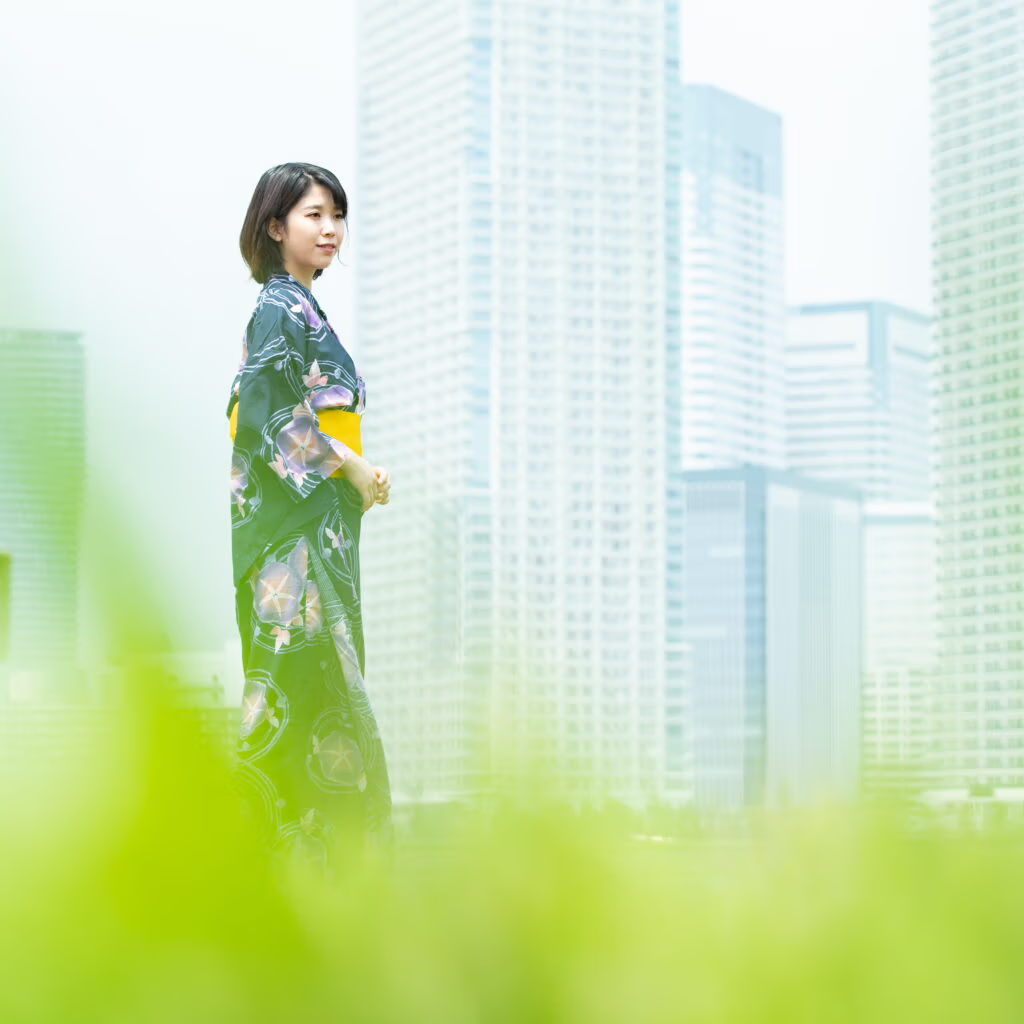
Whenever we think about Japanese traditional clothing, the first thing that springs to mind is the kimono. There are many types of kimono, depending on the age of the wearer, the occasion, and the season.

Unfortunately, modern living in Japan affords very few opportunities to wear the traditional Japanese kimono. Only a very small percentage of elderly women wear it on outings or when relaxing at home.

Despite this, traditional clothing for women is still common at weddings, funerals, and other events of a religious or social nature. For example, students wear a hakama at their graduation ceremonies, and women may wear a cotton yukata during summer festivals.

Young women are apt to wear a colorful kimono to Coming of Age ceremonies, and many women wear a traditional kimono to shrines on New Year’s Day. On these occasions, young people have a number of incentives for wearing traditional Japanese attire. Sometimes it will be to find out more about clothing unique to Japanese culture, to heighten the feeling of a “special” day, and to bestow upon the event a stronger impression for future memories. Much like traditional clothing worn for religious ceremonies in other cultures or countries.


html 4

The traditional Japanese kimono embodies many aspects of Japanese aesthetic culture. Ancient practices of weaving, sewing, and embroidery are heavily present in traditional Japanese clothing. Recently, these traditional methods have been given a modern touch and western style, while still using the materials and sewing techniques seen in traditional kimono. Thus, in some cases, the unique and aesthetic aspects of the kimono are being adapted to suit current sensibilities. Often modernised and seen within the street fashion of Japan.

Apply

Online Now

Apply and join Interac to enrich the lives of hundreds school children as an ALT!

DomesticOutside Japan
Salary:

Range of 2.4 to 3.0 million yen annually for 12-month contracts

Location:

All across Japan

Working conditions:
  • Salary range of 2.4 to 3.0 million yen annually for 12-month contracts
  • 1 year contract (renewable by mutual agreement)
  • Work Mondays to Fridays with scheduled teaching hours between 8 am and 5 pm (there will be a few times a year when schools will have special evenings or weekend events)
  • Enrollment in National Health or Pension schemes, Employment Insurance and Industrial Accident Compensation Insurance
  • 10 paid holidays a year (5 planned), with breaks during the summer and winter school holidays
Requirements:
  • Be a university graduate with at least a bachelor’s degree in any major (If you are graduating in the next six months, you can still apply ahead of time)
  • Can evidence having at least 12 years of education where the language of instruction in all courses was English
  • Professional in all aspects of behavior, in being a team-player, and in being flexible, cheerful, and energetic
RSS feed: Jobs RSS Jobs RSS

Share this article

Leave a Reply

Your email address will not be published. Required fields are marked *