Last updated on October 9th, 2026 at 06:19 pm
Moving around: Transportation in Japan
Public Transport in Japan
Trains
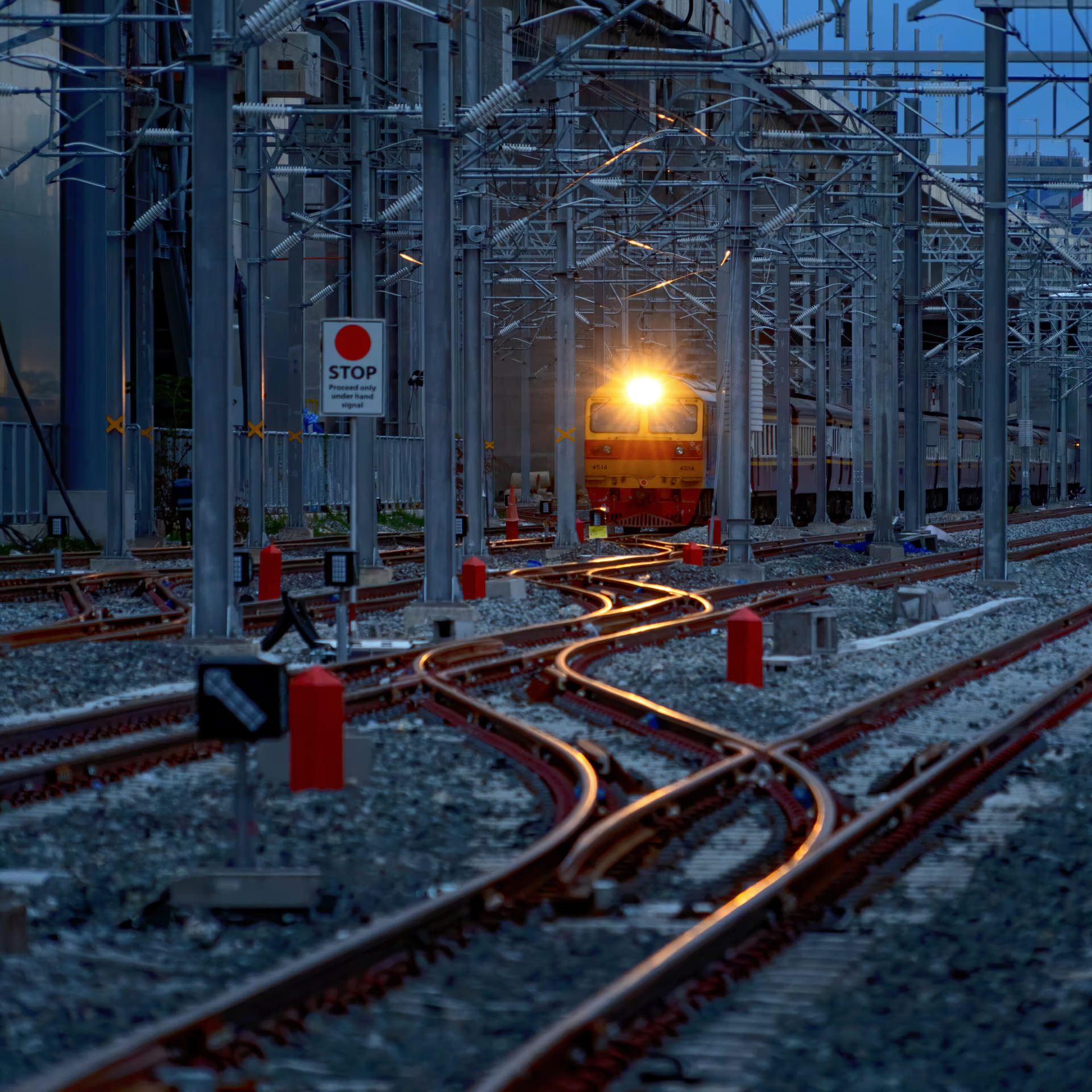
Japan has one of the most advanced train infrastructures in the world. Trains operate on a timetable measured in seconds rather than minutes, which is quote unique to transport in Japan.Â
Being on time is a fundamental part of the train network in Japan. About 70% of Japanâs trains are operated by one of the JR companies, of which there are seven regional companies. The remaining 30%, located mainly in metropolitan areas, are operated by private railway companies.
Travel to and from work by train is the most common situation for Interac ALTs. If you are travelling on the same route to work each day, it is likely you will be encouraged to purchase a monthly train pass, which is reimbursed by Interac. In situations where your journey is different some days of the week and buying a monthly pass is not economical, the actual cost of the train ticket will be reimbursed by Interac.
Buses
Buses in Japan usually operate locally or on short-distance services. They primarily complement train and subway networks by feeding into and out of train stations. In a lot of areas, Japanese buses have ticketing integrated with the train system. Likewise, if you need to use a bus to get to work, the cost will be reimbursed in the same manner as the train pass above.
Getting Around Japan With Your own Transport
Cars
For many of Interacâs rurally placed ALTs, it is a requirement to have a driver license. When a car becomes a requirement for you to travel to and from assignments, you have the option to lease a car for a fee every month. You are also paid an allowance in addition to your monthly salary to offset this cost.
If you have a foreign license, you can drive with an International Driving Permit or official translation (depending on your country) for the first year, but you must get a Japanese driverâs license after this time. To transfer to a Japanese license, you need to submit the required documents to your prefectureâs license office in person. An eye test, written test in English, and driving test are required for license transfer. However, people from certain countries are exempt from the driving test.Â
It is critical that you do not obtain an international driver permit until instructed to do so by Interac. The timing to obtain this is important as it affects the expiry date and validity period for your time in Japan.
Bicycles
Bicycles are ideal for getting around Japan and are very popular, especially if you live more than 10 or 15 minutes from the train station. Most stations have an area for bicycle parking available for a small fee per day. Bicycles are also quite cheap to buy. A âshopping bikeâ can be picked up for under 10,000 yen.Â
Car Sharing In Japan
Are you familiar with Zipcar in your home country? Car sharing (US) or car clubs (UK) is a model of car rental where people rent cars for short periods of time, often by the hour.Â
Car sharing is becoming popular among Japanese who need a car from time-to-time, but have no requirement for a car of their own. They are attractive to people who make only occasional use of a vehicle, as well as others who would like occasional access to a vehicle of a different type than they use day-to-day.
One popular service, for those whole hold a Japanese driver license, is Times Car Plus. For as little as 260 Yen per 15 minutes, you can have access to a network of late model cars strategically located and accessible with an IC card throughout Japan. Times Car are famous for managing permit and coin parking lots throughout Japan, and Times Car Plus is an extension of this business.Â
Although Times Car Plus do not offer any direct service or support in English, their website works well with the translator on Chrome. Car sharing is not a suitable form of transport for getting to and from work.
Apply
Online Now
Apply and join Interac to enrich the lives of hundreds school children as an ALT!
DomesticOutside JapanSalary:
Range of 2.4 to 3.0 million yen annually for 12-month contracts
Location:
All across Japan
Working conditions:
- Salary range of 2.4 to 3.0 million yen annually for 12-month contracts
- 1 year contract (renewable by mutual agreement)
- Work Mondays to Fridays with scheduled teaching hours between 8 am and 5 pm (there will be a few times a year when schools will have special evenings or weekend events)
- Enrollment in National Health or Pension schemes, Employment Insurance and Industrial Accident Compensation Insurance
- 10 paid holidays a year (5 planned), with breaks during the summer and winter school holidays
Requirements:
- Be a university graduate with at least a bachelorâs degree in any major (If you are graduating in the next six months, you can still apply ahead of time)
- Can evidence having at least 12 years of education where the language of instruction in all courses was English
- Professional in all aspects of behavior, in being a team-player, and in being flexible, cheerful, and energetic