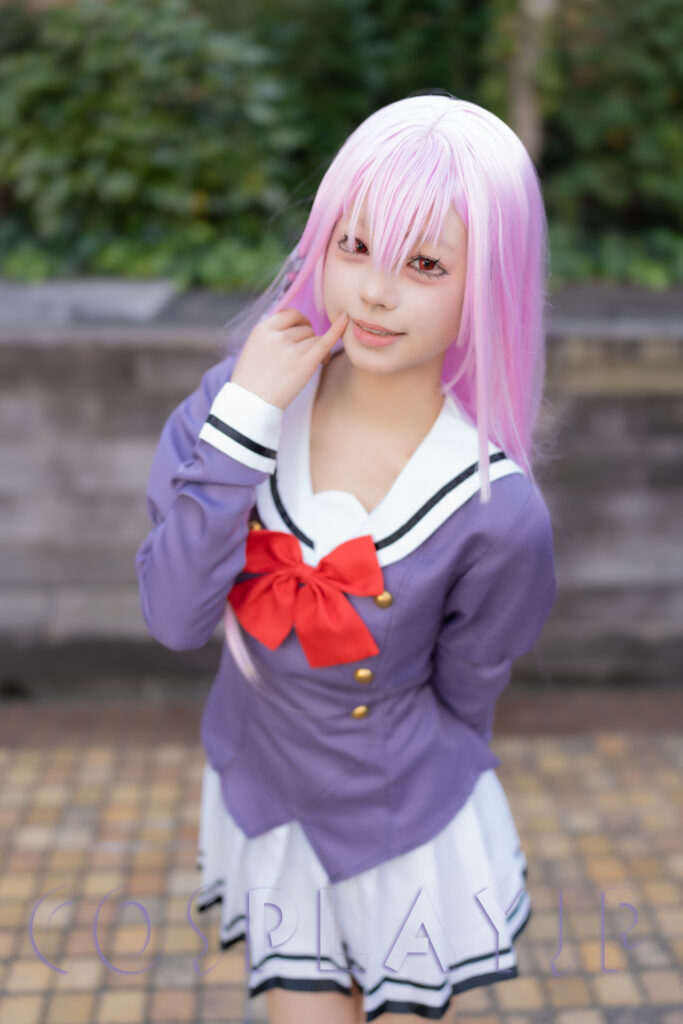
- Sailor Fuku:
The sailor fuku, inspired by 19th-century naval uniforms, is perhaps the most iconic Japanese school uniform. It typically features:- A white blouse with a blue or red sailor collar, often adorned with stripes.
- A pleated skirt, usually navy, black, or gray, with lengths varying from knee-length to shorter styles depending on the character or cosplayer’s preference.
- A necktie or bow, often in bright colors like red, blue, or white, which adds a pop of color.
- Accessories like knee-high socks, ribbons, or hair clips to match the character’s aesthetic.
- In cosplay, sailor fuku is often tailored to specific anime characters, such as Usagi Tsukino from Sailor Moon or Haruhi Suzumiya from The Melancholy of Haruhi Suzumiya. Cosplayers may use wigs to replicate vibrant hair colors or unique hairstyles, and props like school bags or character-specific items enhance authenticity.
- Gakuran:
The gakuran is a traditional male uniform with a militaristic design, featuring:- A high-collared, dark-colored jacket (typically black or navy) with buttons down the front.
- Matching trousers, often straight-cut for a formal look.
- In cosplay, gakuran is popular for characters like Kyon from The Melancholy of Haruhi Suzumiya or protagonists from My Teen Romantic Comedy Yahari. Cosplayers often add wigs or subtle makeup to capture the character’s personality, such as a stoic or rebellious demeanor.
- Modern Uniforms:
Many contemporary anime feature modernized school uniforms, such as:- Blazers in colors like navy, green, or gray, paired with ties or bowties.
- Sweaters or cardigans for a softer, casual look, as seen in series like Kubo Won’t Let Me Be Invisible.
- Checkered or pleated skirts for female characters, often with unique patterns or colors specific to the anime’s school setting.
- These uniforms allow for creative interpretation, as cosplayers may mix and match pieces to reflect a character’s personality or adapt them to street fashion trends like Harajuku or Gyaru styles.
- Materials and Craftsmanship:
Japanese school uniform cosplay emphasizes quality and authenticity. Common materials include:- Cotton and polyester blends for durability and comfort.
- Wool or synthetic fabrics for blazers and skirts to achieve a crisp, structured look.
- Cosplayers often invest in high-quality wigs, makeup, and accessories to replicate intricate details, such as specific buttons, emblems, or embroidery seen in anime. For example, a Jujutsu Kaisen uniform might include precise stitching to mimic Satoru Gojo’s Jujutsu High attire.
- Cultural Context and Appeal:
School uniforms in Japan symbolize youth, discipline, and collectivism, resonating deeply in a society that values group identity. In anime and manga, schools are common settings, making uniforms a natural choice for character designs. Cosplayers are drawn to these uniforms for several reasons:- Nostalgia: Many cosplayers associate uniforms with their own school experiences, evoking seishun (youthful) memories.
- Iconic Characters: Uniforms are tied to beloved characters like Sailor Moon, Light Yagami (Death Note), or Yumeko Jabami (Kakegurui), allowing cosplayers to embody their favorites.
- Versatility: Uniforms can be adapted for both accurate character portrayals and creative reinterpretations, such as blending sailor fuku with Lolita fashion.
- Photography Focus: In Japan, cosplay emphasizes photo shoots over performances, and school uniforms provide a clean, photogenic aesthetic that stands out in urban or studio settings.
- Accessories and Styling:
Accessories are crucial for authenticity:- Wigs: Often styled to match a character’s exact hair color and cut, such as Nagisa Shiota’s blue hair from Assassination Classroom.
- Socks and Shoes: Knee-high socks, loafers, or Mary Janes are standard, with details like stripes or bows adding character-specific flair.
- Props: School bags, notebooks, or character-specific items (e.g., Maka Albarn’s scythe from Soul Eater) enhance the cosplay’s narrative.
- Makeup: Subtle makeup for natural looks or bold styles for dramatic characters, like the intense expressions of Kakegurui characters.
- Comiket (Comic Market):
- Description: Held biannually in August and December at Tokyo Big Sight, Comiket is one of the world’s largest conventions for anime, manga, and cosplay. It’s a hotspot for doujinshi (fan-made works) and cosplay, with dedicated areas for cosplayers to pose and be photographed.
Attendance: Approximately 750,000 attendees per event (combined across three days), based on recent estimates from 2024.

- School Uniform Cosplay: Characters from school-based anime like My Teen Romantic Comedy Yahari or Horimiya are popular, with cosplayers showcasing sailor fuku and blazer uniforms in the “Cosplayer World” area.
- Photography: Designated cosplay zones outside Tokyo Big Sight, particularly near the industrial waterfront, offer scenic backdrops for photos.
- AnimeJapan:
- Description: Held annually in March at Tokyo Big Sight, AnimeJapan is a major anime convention with cosplay parades, photo areas, and industry booths. It’s known for its “Cosplayer World” section, where school uniform cosplays shine.
Attendance: Over 152,000 attendees in 2018, with similar figures in recent years.

- School Uniform Cosplay: Popular for characters from Kubo Won’t Let Me Be Invisible or Kaguya-sama: Love is War, where uniforms are central to the aesthetic.
- Photography: Halls 3 and 8, as well as outdoor areas near Tokyo Bay, are ideal for capturing cosplay photos.
- Ikebukuro Halloween Cosplay Festival:
- Description: Held annually in late October in Tokyo’s Ikebukuro district, this festival blends Halloween themes with anime cosplay. Cosplayers parade through the streets, and school uniform cosplays are common due to their versatility.
Attendance: Approximately 20,000–30,000 attendees, based on recent reports.

- School Uniform Cosplay: Characters like those from Tokyo Revengers (featuring gang-related school uniforms) or Demon Slayer (academy arcs) are popular.
- Photography: Sunshine City, Sunshine Street, and nearby parks provide urban and festive backdrops.
- Tokyo Comic Con:
- Description: Held in late November or early December in Chiba (near Tokyo), this event blends Western and Japanese pop culture, with cosplay contests and parades. School uniform cosplays are often reimagined with Western influences (e.g., Persona 5’s Joker in a school uniform).
Attendance: Around 60,000–70,000 attendees, based on pre-2020 figures.

- School Uniform Cosplay: Uniforms from Persona series or Danganronpa are prevalent due to their stylized designs.
- Photography: The convention venue and surrounding areas offer modern indoor settings for photos.
- Tokyo Game Show (TGS):
- Description: Held in September in Chiba, TGS is a video game convention with a strong cosplay presence. School uniform cosplays from games like Persona or Danganronpa are common.
Attendance: Approximately 250,000 attendees, based on recent years.
- School Uniform Cosplay: Uniforms from Persona 4 or Blue Archive are popular due to their game-inspired designs.
- Photography: Indoor booths and outdoor areas near the Makuhari Messe venue are ideal for photos.
- Harajuku:
Why: Harajuku, particularly Takeshita Street, is a hub for youth culture and street fashion. Cosplayers often gather here on weekends, especially near CONOMi, a famous school uniform shop offering “free uniforms” for casual or cosplay use.

- Photography Tips: The colorful, crowded streets provide dynamic urban backdrops. Early mornings or late afternoons offer softer lighting. Be respectful and ask for permission before photographing cosplayers.
- School Uniform Cosplay: Sailor fuku and modern blazer uniforms inspired by K-on! or Love Live! are common.
- Akihabara:
Why: Known as the anime and manga capital, Akihabara is home to cosplay shops like Cospatio Gee! and cafes where cosplayers gather. It’s a hotspot for otaku culture.