When Japan Chose Buddhism
The arrival of Buddhism in Japan was far more than the introduction of a new religion. During the sixth and seventh centuries, the Japanese court was deciding how the country should develop and where it belonged within the wider world of East Asia. Buddhism became closely connected with those political and cultural questions, eventually helping transform Japanese government, art, architecture and ideas about society.
Buddhism reached Japan through connections with the Korean Peninsula, bringing with it scriptures, images, rituals and intellectual traditions that had already developed across China and Korea. Its arrival created a debate among powerful Japanese clans. Some saw the new religion as a source of knowledge and political prestige, while others feared that adopting foreign religious practices could anger the indigenous kami and undermine established traditions.
Buddhism Arrives From the Korean Peninsula
The traditional date given for the official introduction of Buddhism to the Japanese court is 538, although another important historical source gives the year as 552. Modern historians generally regard the precise date as uncertain, but there is broad agreement that Buddhism entered Japan through diplomatic contacts with the Korean kingdom of Baekje during the sixth century.
The arrival of Buddhist images and scriptures gave the Yamato court access to a religious tradition that was already deeply established elsewhere in Asia. Buddhism also came with artistic techniques, written culture and models of temple construction, linking religious change to a much broader exchange with the continent.
For Japanese rulers, this was particularly significant because China was then the dominant cultural and political power in East Asia. Adopting elements of continental civilisation could demonstrate that Japan was participating in the same international cultural world. Buddhism consequently became associated with diplomacy and state-building as well as religious belief.
A Religious Dispute Becomes a Political Struggle
The introduction of Buddhism did not immediately produce agreement at the Japanese court. Powerful clans took different positions, and the dispute became intertwined with existing rivalries over political influence.
The Soga clan became prominent supporters of Buddhism. Other powerful groups, including the Mononobe, resisted its adoption. Opposition was not simply based on theological disagreement. Buddhist worship represented a new set of relationships and ideas that could alter the balance of power at court.
The issue became particularly intense during the reigns of Emperor Kinmei and his successors. According to historical accounts, the Soga eventually defeated the Mononobe in 587. The victory removed one of the most important centres of organised resistance to Buddhism and allowed its supporters to promote the religion more openly. Records of the period therefore show Buddhism becoming part of a much larger political transformation.
Why Buddhism Was Attractive to the Court
Buddhism offered the Japanese ruling elite more than a system of religious beliefs. It provided access to a sophisticated intellectual and cultural tradition that had spread across Asia. Buddhist temples could demonstrate the wealth and authority of their sponsors, while Buddhist rituals were increasingly associated with protecting the state and ensuring peace.
The religion also fitted into the court's growing interest in Chinese political models. Japan was developing a stronger sense of itself as a unified state, and its rulers were looking towards continental examples of administration and government.
Becoming a Buddhist country could also help Japan establish itself as a legitimate participant in the Chinese cultural sphere. The adoption of Buddhism was therefore part of a wider decision by sections of the Japanese elite to engage more deeply with continental Asia rather than develop in isolation.
Prince Shotoku and the Expansion of Buddhism
One of the most important figures associated with the early development of Buddhism in Japan was Prince Shotoku. Serving during the reign of Empress Suiko, Shotoku became an important political figure and supporter of Buddhist institutions.
Shotoku's involvement helped establish Buddhism more firmly within the court. Temples were constructed, Buddhist teachings were promoted and diplomatic links with China were strengthened. The religion was increasingly incorporated into the political and cultural life of the Yamato state.
The famous Seventeen-Article Constitution traditionally attributed to Shotoku also reflects the influence of Buddhist and Confucian ideas. Although it was not a constitution in the modern sense, it presented principles concerning harmony, government and political conduct. Buddhism had consequently become part of the intellectual framework through which some Japanese leaders considered the organisation of society.
Temples Become Symbols of a Changing Japan
As Buddhist influence expanded, temples became some of the most visible symbols of the transformation taking place in Japan. Large religious complexes required skilled craftsmen, architects and artists, many of whom were influenced by techniques and traditions arriving from the Korean Peninsula and China.
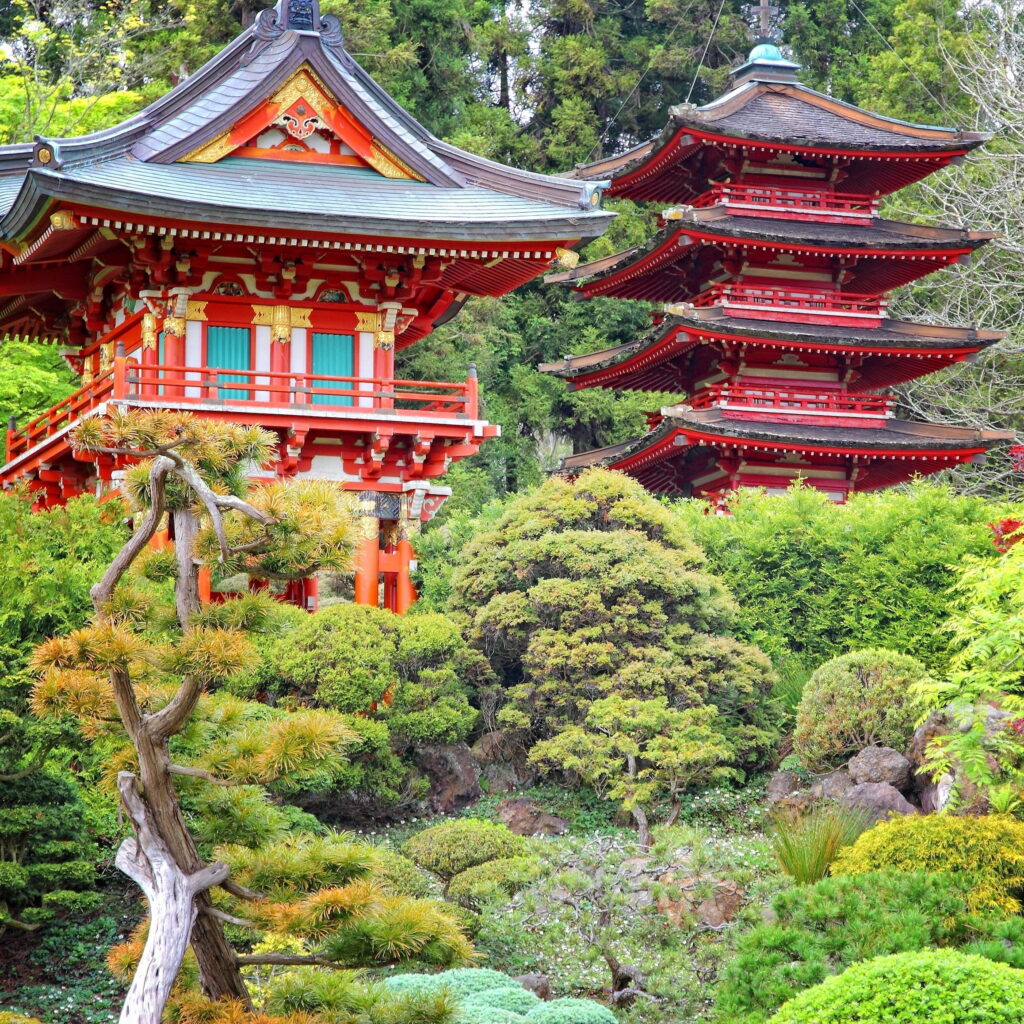
Horyuji near Nara is one of the most important surviving examples of early Japanese Buddhist architecture. Its buildings preserve elements of the architectural traditions introduced during the Asuka period and demonstrate how quickly continental artistic influences were adapted to Japanese conditions.
Buddhist art also transformed the visual culture of the court. Sculptures of Buddhas and bodhisattvas became important objects of devotion and patronage, while temple complexes provided settings for rituals that were very different from older forms of kami worship.
Buddhism and Indigenous Japanese Beliefs
The adoption of Buddhism did not mean that Japan simply abandoned its existing religious traditions. Belief in kami and local sacred places remained deeply rooted, and over subsequent centuries Buddhism and indigenous Japanese practices became closely intertwined.
This relationship eventually produced forms of religious cooperation in which Buddhist temples and kami shrines could exist alongside one another. Rather than creating a permanent division between two completely separate religions, Japanese religious culture developed through centuries of interaction and adaptation.
The distinction between Buddhism and Shinto that many people recognise today is therefore partly the result of much later developments. Before the modern period, the two traditions were frequently connected in religious practice.
From Court Religion to State Buddhism
During the seventh and eighth centuries, Buddhism became increasingly integrated into the institutions of the Japanese state. The government sponsored temples and religious ceremonies, while rulers used Buddhist rituals as part of efforts to protect the country and maintain political order.
The process was gradual. The early arrival of Buddhist images and scriptures did not immediately create a fully functioning Buddhist religious establishment. A major development came in the eighth century, when the Chinese monk Jianzhen, known in Japan as Ganjin, finally reached Japan after several unsuccessful attempts to make the dangerous journey.
In 754, Ganjin and other monks helped establish formal Buddhist ordination in Japan. His arrival is regarded as an important moment in the development of an organised Japanese Buddhist community because qualified monks could now be officially ordained according to established disciplinary traditions.
The Nara State and the Power of Buddhism
By the Nara period, Buddhist institutions had become closely connected with government. The construction of major temples required substantial resources, while senior Buddhist establishments accumulated political influence.
One of the clearest expressions of state-sponsored Buddhism was the construction of Todaiji and its enormous Great Buddha under Emperor Shomu. The project demonstrated the scale of resources that the government could devote to religion and reflected the belief that Buddhism could help protect the country.
At the same time, the growing political influence of Buddhist monasteries eventually became a concern for rulers. Powerful temples could possess land, wealth and networks of influence, creating tensions between religious institutions and the central government.
Buddhism Becomes a Defining Part of Japanese Culture
The decision to embrace Buddhism during the sixth century had consequences that extended far beyond the original dispute at the Yamato court. Over the centuries, Buddhism influenced Japanese philosophy, literature, sculpture, architecture, burial customs and ideas about death and the afterlife.
New schools of Buddhism later emerged, including Tendai and Shingon, while Zen, Pure Land and Nichiren traditions became important during subsequent periods. Each adapted Buddhist teachings to different Japanese social and cultural circumstances.
The religion also became deeply connected with everyday life. Buddhist temples became centres for funerals, memorial services and the remembrance of ancestors, roles that remain important in Japanese society even though religious identification can be complex and many people participate in practices associated with more than one tradition.
A Decision That Changed Japan
Japan's adoption of Buddhism was therefore not a single moment when an entire population suddenly changed its religion. It was a long political, cultural and religious process that began with the arrival of Buddhism through Korea and developed through conflicts among powerful clans, royal patronage and growing connections with China.
The supporters of Buddhism saw opportunities in a religion that connected Japan to the wider East Asian world. Its opponents feared the consequences for established traditions and political authority. The eventual victory of Buddhist supporters helped open the way for a profound transformation of Japanese culture and government.
More than fourteen centuries later, the legacy of that decision can still be seen across Japan. From ancient temples and Buddhist sculpture to funeral traditions and religious customs, Buddhism became one of the major forces in the development of Japanese civilisation. What began as a controversial foreign belief ultimately became an enduring part of the country's history and culture.
Source: Japan Today