Boat Towed by North Korean Cargo Ship Sinks off Japan, Leaving One Person Missing
A small boat carrying four people sank off Japan's northwestern coast on September 17 after it was being towed by a North Korean cargo ship, leaving one person missing and another presumed dead, according to the Japan Coast Guard.
The incident occurred in waters inside Japan's exclusive economic zone, about 104 kilometers southwest of Nishinoshima, one of the Oki Islands. Japanese authorities launched a search and rescue operation after being notified that four people had fallen into the water.
Three of the four people were subsequently recovered from the sea. Two were conscious when rescued, while the third was found without vital signs and was presumed dead. The fourth person remained missing as authorities continued investigating the incident.
Boat Sank While Being Towed
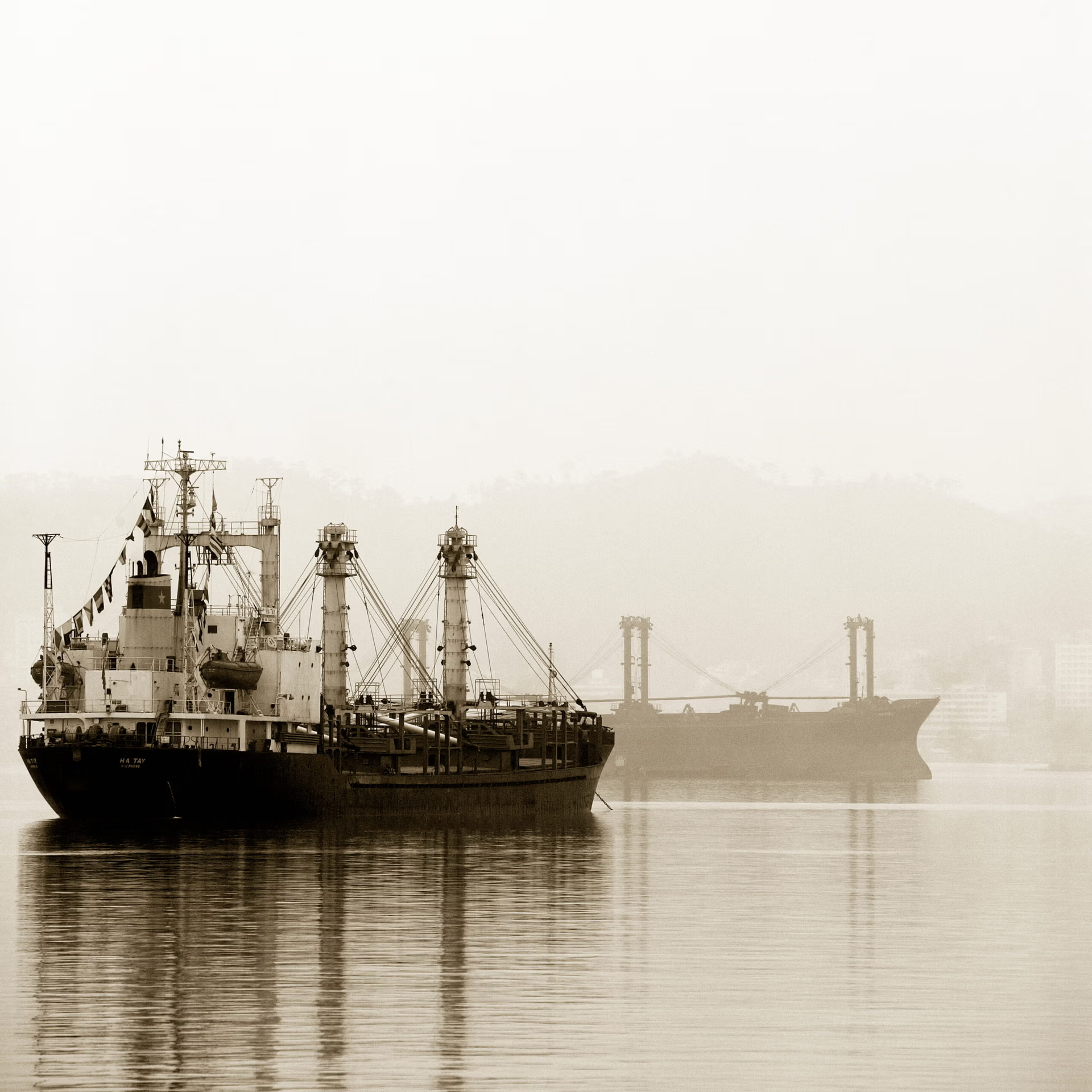
The Japan Coast Guard said the small boat was being towed by the North Korean-flagged cargo ship Kum Ya when the accident happened. The circumstances surrounding the sinking were not immediately clear.
North Korea's Rescue Coordination Center notified the Japan Coast Guard's regional headquarters in Kyoto after the incident. The notification reported that four people had fallen overboard in the waters off the coast of western Japan.
Japanese authorities responded by sending patrol vessels and aircraft to the area. The search operation was conducted in waters approximately 104 kilometers southwest of Nishinoshima, within Japan's exclusive economic zone.
The location meant that the Japan Coast Guard was responsible for coordinating the search and rescue response even though the incident involved a North Korean vessel.
Three People Recovered From the Sea
The search operation succeeded in locating three of the four people who had gone into the water. Two were recovered at around 12:15 p.m., several hours after the initial incident.
A third person was recovered at approximately 1:10 p.m. The Japan Coast Guard said two of the rescued people were conscious, while the third was in cardiopulmonary arrest and was presumed dead.
Despite the search operation, no trace of the fourth person was immediately found. Japanese authorities continued searching the surrounding waters for the missing individual.
The rescue operation involved both patrol vessels and aircraft, allowing the coast guard to search a wider area of ocean around the location where the four people had entered the water.
Nationalities Were Still Being Investigated
Japanese authorities said they were investigating the nationalities of the four people involved in the incident. At the time of the initial reports, officials had not confirmed that all four were North Korean nationals.
The coast guard was also investigating whether the sunken boat was directly connected to the North Korean cargo ship Kum Ya. Although the boat was being towed by the cargo vessel, officials were examining its precise relationship with the ship.
Authorities were also trying to establish what the small boat had been doing in the area and why it was being towed there.
Those questions remained under investigation after the three survivors were recovered. Officials therefore did not immediately provide a detailed explanation of what caused the boat to sink.
The Incident Happened Inside Japan's Exclusive Economic Zone
The accident took place inside Japan's exclusive economic zone, or EEZ, off the northwestern coast. The area lies near the Oki Islands in Shimane Prefecture.
An EEZ extends beyond a country's territorial waters and gives the coastal state specific rights relating to natural resources and certain maritime activities. It does not mean that the waters are the same as territorial waters, but Japan has important jurisdictional responsibilities in the area.
Because the incident occurred within Japan's EEZ and involved people in the water, the Japan Coast Guard responded to the emergency and deployed its search and rescue resources.
The location also brought a North Korean vessel into the focus of Japanese maritime authorities, although the available reports did not indicate that the incident itself was related to any wider confrontation between the two countries.
South Korea Also Joined the Search Effort
South Korean authorities also mobilised resources to assist with the search and rescue operation. Two Korea Coast Guard patrol vessels and an aircraft were deployed, along with a South Korean Navy vessel and a fisheries patrol vessel.
The Korea Coast Guard requested search and rescue cooperation through the relevant maritime coordination centres. The involvement of South Korean authorities added further resources to the operation as crews searched for the missing person.
The response demonstrated how maritime emergencies can lead to cooperation between regional authorities even when the countries involved have complicated political relationships.
The immediate objective of the search operation was to locate people who had fallen into the sea and provide medical assistance to those recovered, rather than determine the wider circumstances surrounding the North Korean vessel.
The Kum Ya Cargo Ship
The vessel involved in the incident was identified as the North Korean-flagged general cargo ship Kum Ya. Maritime information shows that the ship is approximately 97 meters long and has a gross tonnage of about 5,519 tonnes.
The ship was built in 1991 and previously operated under the name Lucky Star 7. It transferred to the North Korean flag in 2016.
The Kum Ya has also appeared in previous international reporting concerning North Korean maritime trade. A United Nations Panel of Experts report documented the vessel in connection with shipments of North Korean-origin coal to Chinese waters in 2021.
That history is separate from the circumstances of the September 2026 accident. Japanese authorities were investigating the sinking itself, including the purpose of the smaller boat and its relationship with the Kum Ya.
Investigation Into the Sunken Boat
The Japan Coast Guard had not immediately established why the boat sank. Officials were investigating the circumstances of the towing operation as well as the activities of the small vessel before the accident.
Determining the cause of the sinking could depend on information from the surviving crew members, the North Korean cargo ship and other available evidence from the scene.
Authorities were also working to establish the identities and nationalities of everyone involved. This information was not immediately available in the first reports of the incident.
The investigation therefore remained at an early stage, with the search for the missing person continuing alongside efforts to determine what happened to the boat.
A Maritime Emergency Involving a North Korean Vessel
The incident is unusual because it involved a North Korean-flagged cargo vessel operating in waters off Japan while Japanese and South Korean authorities responded to a maritime emergency.
North Korea's Rescue Coordination Center contacted the Japan Coast Guard after the four people entered the water. The notification allowed Japanese authorities to begin a search operation and deploy vessels and aircraft to the reported location.
The response was focused on the immediate safety of the people involved. The nationality of the vessel did not prevent the Japan Coast Guard from carrying out its maritime search and rescue responsibilities.
The involvement of South Korean rescue resources added another international element to the operation, with authorities from the two neighbouring countries contributing vessels and aircraft to the search.
One Person Remains Missing
The central unresolved issue after the initial rescue operation was the whereabouts of the fourth person who had been aboard the boat. Three people had been recovered, but the fourth remained missing.
Search teams used patrol vessels and aircraft to examine the surrounding waters. The difficult conditions involved in searching for a person in open sea can make such operations particularly challenging, especially when a significant amount of time has passed since someone entered the water.
The condition of the three people recovered also remained an important part of the response. Two were conscious, while the third was presumed dead after being recovered without vital signs.
Authorities continued to gather information about the incident while the search operation remained focused on locating the missing person.
Questions Remain About What Happened
Several important details remained unclear after the accident. Japanese authorities had not established the reason the boat was in the area, why it was being towed by the Kum Ya or what caused it to sink.
Officials were also still investigating whether the smaller boat was directly associated with the North Korean cargo ship and were working to determine the nationalities of those involved.
Until those investigations are completed, there is no confirmed explanation for the sinking beyond the fact that the boat was being towed when the four people entered the water.
The Japan Coast Guard's search and investigation therefore continued after three people had been recovered, with particular attention on the missing fourth crew member and the circumstances that led to the boat going down.
Search and Rescue Operation Continues
The sinking off Japan's northwestern coast resulted in a coordinated search involving Japanese and South Korean maritime authorities. Japan deployed patrol vessels and aircraft, while South Korea contributed coast guard, naval and fisheries patrol resources.
Three of the four people from the boat were recovered, but one remained missing. One of those recovered was presumed dead, while two were conscious after being rescued.
The incident took place inside Japan's exclusive economic zone near the Oki Islands, and the Japan Coast Guard continued investigating both the identities of those involved and the circumstances surrounding the sinking.
For now, the key unanswered questions concern the missing person, the purpose of the small boat and the reason it sank while being towed by the North Korean cargo ship Kum Ya. Japanese authorities are expected to use information from the rescue operation and the vessels involved to establish what happened.