Hundreds of Deer Found in Japan’s Southern Alps, Raising Concerns Over Damage to Mountain Ecosystem
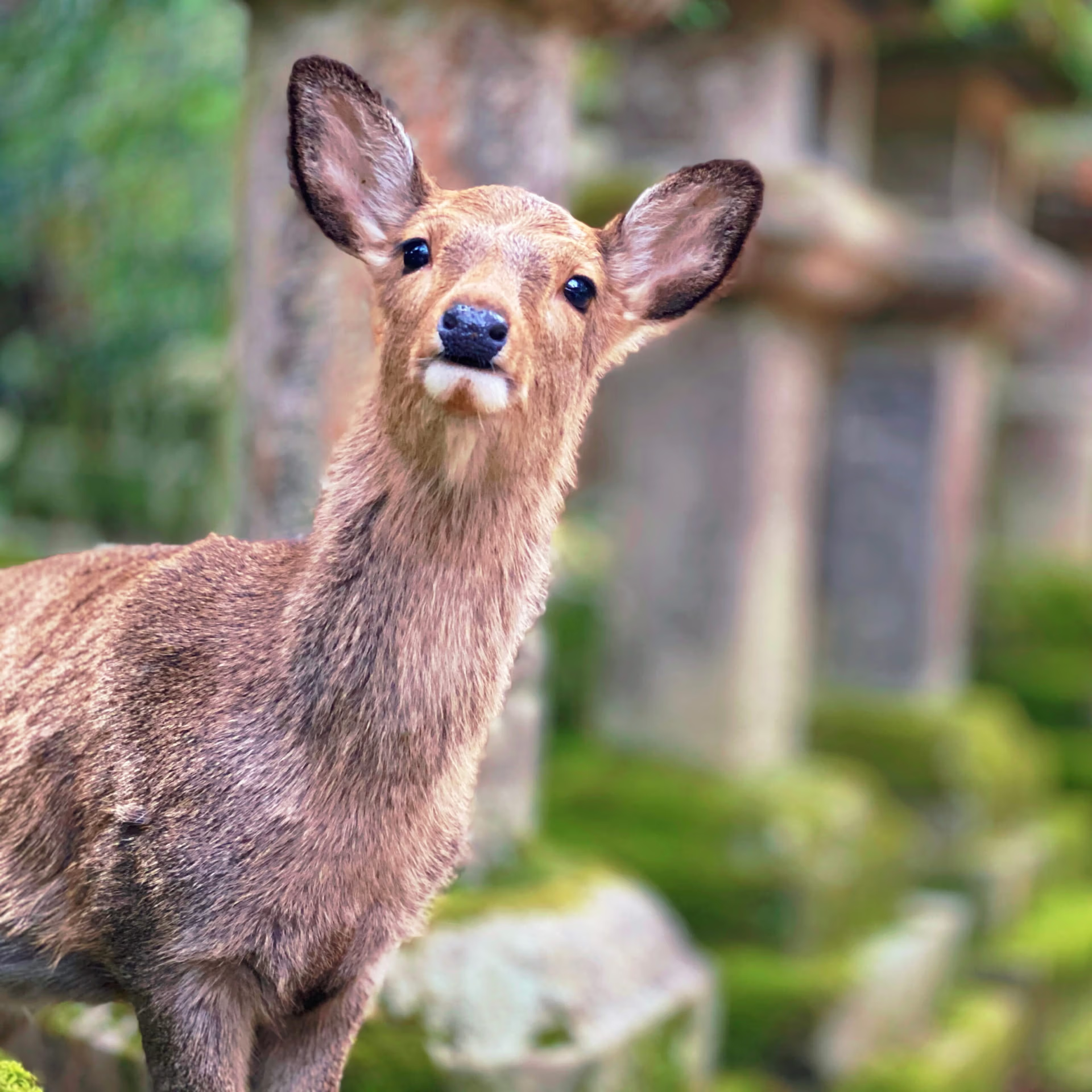
A large herd of Japanese deer has been discovered in a remote area of Japan’s Southern Alps, with the sighting raising concerns about the growing impact of the animals on the fragile mountain ecosystem.
The herd was spotted during the summer on the border between Ina City and Oshika Village in Nagano Prefecture. Aerial photographs showed what appeared to be several hundred deer gathered across the slopes of Mount Niji, at an elevation of around 1,900 metres.
The discovery has attracted attention because the animals were found at a relatively high altitude in an area that is difficult for people to reach. Officials and researchers are concerned that the expansion of deer into higher parts of the Southern Alps could have consequences extending well beyond damage to individual plants.
A Herd of Hundreds Spotted From the Air
The large concentration of deer was identified through aerial photography conducted in the Southern Alps. The animals were seen covering a section of the mountain slope, making the scale of the herd apparent from above.
The herd was estimated to contain between 200 and 300 Japanese sika deer. The sighting took place on the northern slope of Mount Niji, a mountain rising to approximately 1,900 metres above sea level.
The location is on the boundary between Ina City and Oshika Village in Nagano Prefecture. Its remote position makes the animals particularly difficult to manage because vehicles cannot easily reach the area.
The discovery was significant not simply because of the number of deer visible at one location, but because it provided evidence that large numbers of the animals have established themselves in higher-altitude areas of the Southern Alps.
Deer Numbers Have Increased Across Nagano
The Southern Alps are already an area where Japanese deer have become a major wildlife-management concern. Deer numbers in Nagano Prefecture have increased substantially over the past decade, despite efforts to control the population.
The estimated deer population in Nagano has grown by tens of thousands over that period. The animals have expanded their range into areas where their presence can affect forests, vegetation and alpine environments.
Japanese sika deer are native to Japan, but problems can arise when their population becomes too large for the available vegetation and habitat to support without significant environmental effects.
In the Southern Alps, the concern is particularly serious because high-altitude environments contain plants and vegetation that can be vulnerable to repeated grazing. The mountain ecosystem is also exposed to other pressures, including severe weather and changes in climate.
Alpine Plants Face Increasing Pressure
One of the principal concerns associated with the expanding deer population is damage to alpine plants. Deer feed on vegetation, and repeated grazing can reduce the amount and variety of plants growing in an area.
The Southern Alps contain distinctive mountain vegetation that has adapted to the harsh conditions found at high elevations. Plants growing in these environments can have limited opportunities to recover when they are repeatedly eaten.
The effect can become more pronounced when large numbers of deer repeatedly use the same areas. As vegetation is consumed, some plant species can become less abundant while areas of exposed soil become increasingly common.
The problem is therefore not necessarily limited to the loss of individual plants. Changes in vegetation can alter the wider structure of a mountain ecosystem and affect other organisms that depend on that vegetation.
Concerns Extend to the Mountain’s Ability to Hold Water
Officials are also concerned about the potential effect of deer on the Southern Alps' ability to retain water. When deer repeatedly feed on vegetation and damage young trees and other plants, the protective vegetation covering the ground can be reduced.
Vegetation plays an important role in mountain environments. Plants and their roots help stabilise soil, slow the movement of water and contribute to the ability of slopes to retain moisture.
When vegetation is removed or the ground is repeatedly disturbed by animals, more soil can become exposed. Heavy rainfall can then wash soil downslope more easily.
This has raised concerns that the increase in deer could contribute to erosion and potentially increase the risk of landslides in vulnerable areas.
Research published in 2026 by scientists working in the northern part of the Southern Alps has also examined the relationship between deer activity and soil erosion. The study area in Nagano is a high-density deer region, and the researchers found that disturbance by deer can play an important role in mountain soil erosion.
A Difficult Place to Control the Deer
One of the biggest problems facing authorities is the difficulty of reaching the area where the large herd was discovered.
The mountainous terrain means that vehicles cannot simply be driven into the area. This makes conventional methods of capturing or controlling deer considerably more difficult than they would be in areas closer to roads and settlements.
The animals are also able to move through steep and rugged terrain that can be difficult and potentially dangerous for people to access.
The result is a difficult wildlife-management problem. Authorities can identify areas where deer numbers are high, but reaching the animals and reducing their numbers can require considerable resources and specialist knowledge.
The remote location of the herd on Mount Niji therefore adds another layer of difficulty to efforts to manage the growing deer population in Nagano.
The Southern Alps Are an Important Natural Environment
Japan's Southern Alps form one of the country's major mountain ranges and contain extensive forests, alpine environments and high-elevation habitats.
The area is home to a wide variety of plants and animals. Its high mountains create different environments at different elevations, ranging from forests at lower levels to alpine vegetation closer to the highest peaks.
Changes to one part of that environment can therefore have consequences elsewhere. When grazing pressure increases, vegetation can change, which can then influence soil conditions and the availability of food and shelter for other species.
Conservation officials are consequently concerned about the long-term effect of large deer populations rather than simply the immediate damage visible at individual locations.
Deer Have Been Moving Into Higher Areas
The discovery on Mount Niji is also important because it shows how far Japanese deer have moved into mountain environments. Researchers have previously documented deer using high-altitude areas of the Southern Alps during different seasons.
GPS tracking research has shown that individual deer can move considerably between elevations depending on the season. Some animals have been recorded moving into areas above 2,000 metres during summer before descending to lower elevations later in the year.
This seasonal movement means that deer can use different parts of the mountain landscape throughout the year. A population that appears concentrated at lower elevations at one time of year can therefore affect higher areas during another season.
The discovery of hundreds of deer together on a high mountain slope provides further evidence of the animals' ability to occupy parts of the Southern Alps that were once less heavily affected by them.
Conservation Efforts Have Been Underway for Years
Nagano Prefecture has been carrying out deer population-control measures for many years. Culling programmes have been used as authorities attempt to reduce the pressure that growing deer numbers place on forests and agricultural land.
However, controlling the population across a large mountainous region is a difficult task. Deer reproduce naturally, move between areas and can survive in a wide variety of habitats.
The scale of the Southern Alps also makes it impossible to treat every part of the mountain range in the same way. Areas close to roads may be accessible to hunters and wildlife-management teams, while remote high-elevation locations can be considerably more difficult to reach.
The newly observed herd demonstrates why population control remains a continuing issue. Even where measures have been in place for years, deer can persist in remote environments and continue expanding their use of mountain habitats.
Why a Large Herd Matters
Seeing several hundred deer gathered in one location does not necessarily mean that the entire Southern Alps population is concentrated in that single area. Deer move between habitats, and aerial observations provide a snapshot of their distribution at a particular time.
However, the size of the herd is significant because it shows that a substantial number of animals are capable of using the high-altitude environment at the same time.
A large concentration can also place considerable grazing pressure on the vegetation available within its range. If the animals repeatedly return to the same locations, the effect can accumulate over several seasons.
For conservation officials, the challenge is therefore to understand how the herd is using the mountain, where the animals move during different seasons and what effect their presence is having on vegetation and soil.
Potential Impact Goes Beyond Plants
The concern over the deer is not simply that they are eating alpine plants. The wider issue is the possibility of changes to the physical environment caused by the loss of vegetation.
Plants help protect mountain slopes from erosion. When vegetation is damaged, rainfall can reach exposed soil more easily, while roots that once helped hold the ground together may become less effective.
In steep terrain, these changes can become particularly important. Water moving rapidly downhill can carry soil and sediment with it, potentially affecting streams and other parts of the watershed.
Research in the Southern Alps has identified deer disturbance as an important factor in understanding soil erosion in high-elevation forested environments. The findings underline why deer population management is also an environmental-management issue.
Officials Face a Difficult Balance
The situation presents authorities with a complicated balance. Japanese deer are native wildlife rather than an introduced species, but unusually high numbers can cause significant ecological damage.
Managing the population therefore requires decisions about how many animals an ecosystem can support without suffering unacceptable levels of damage and how those numbers can be controlled across a difficult mountainous landscape.
The discovery of the large herd in the Southern Alps is likely to increase attention on that problem. The fact that the animals were found at around 1,900 metres demonstrates that population-management efforts cannot focus only on farmland or lower-elevation forests.
High mountain environments are also becoming part of the wider deer-management challenge facing Nagano Prefecture.
A Warning for the Southern Alps Ecosystem
The discovery of between 200 and 300 deer on Mount Niji has provided a striking illustration of the scale of the wildlife-management issue developing in Japan's Southern Alps.
The herd was found in a remote location where capturing deer is difficult, while the animals' presence at high altitude raises concerns about damage to alpine vegetation, forest regeneration, soil stability and the mountain's ability to retain water.
Nagano has already been working for years to control its deer population, but the continuing expansion of the animals into difficult terrain shows how challenging that task has become.
For conservation officials, the immediate priority is understanding the scale and movement of the population and assessing the damage being caused. The longer-term challenge will be finding ways to manage deer numbers without causing further disruption to an already sensitive mountain environment.
The sighting on Mount Niji has therefore become more than an unusual wildlife observation. It is evidence of a broader ecological problem in which a native species has reached numbers and locations capable of changing the landscape around it.